
FaceTone: Face Fitness & Yoga
Takeclass Holding Ltd.Beauty
0.00.00 Reviews
- Version
- 1.1.40
- Installs
- 10.00K
- Age Rating
- Everyone
Screenshots
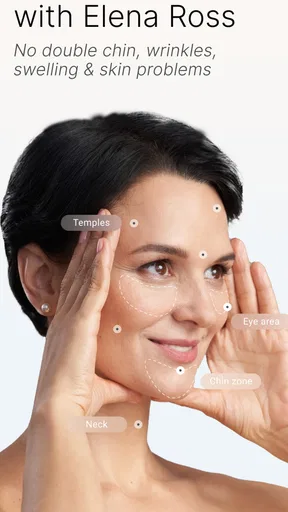
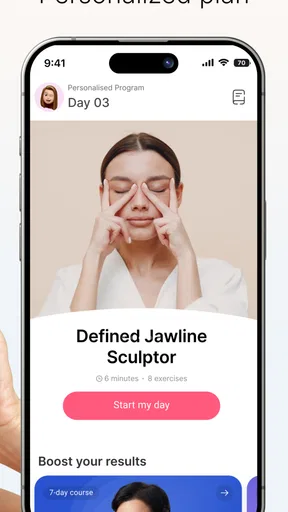
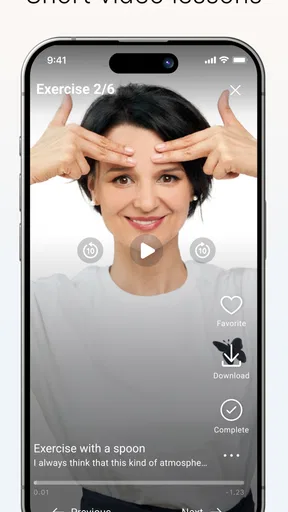
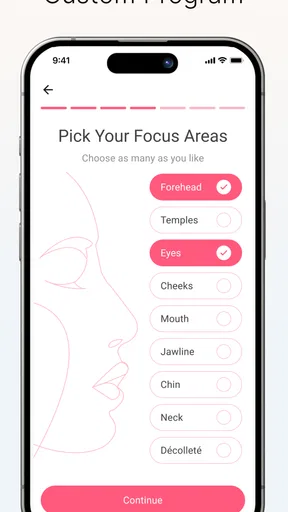
Our Review of FaceTone: Face Fitness & Yoga
 Analysis by Appyee
I tried FaceTone as a beauty app built around face yoga and daily self-care, and my first impression was that it aims to make facial exercises feel easier to fit into ordinary routines. Instead of treating beauty care as a long appointment or a complicated collection of products, it presents the idea as something you can practise in small sessions at home. That makes it interesting for anyone who prefers a guided routine over searching through scattered videos.
The app comes from Takeclass Holding Ltd. and is listed for Everyone, so its presentation is intended to be approachable for a broad audience. It is free to install, which makes trying the basic experience relatively low-risk. The important distinction is that in-app purchases are listed from $9.99 to $99.99 per item. I would therefore treat the free access as an opportunity to judge the routine and presentation first, not as a promise that every part of the experience is included without payment.
How FaceTone fits into a real beauty routine
I look at FaceTone as a small, repeatable part of a beauty routine rather than a replacement for skincare or professional care. In this section, I’ll focus on how to make a guided facial practice easier to return to, including a simple way to judge whether its pace suits you. That practical fit matters before considering what has changed between versions.
A simple idea with a practical entry point
FaceTone focuses on face fitness and yoga rather than asking me to build a skincare shelf before I can begin. That is its clearest identity. The appeal is not just the subject itself, but the low barrier to starting: I can approach a session as a short personal-care habit instead of planning a full beauty treatment.
In my experience, this kind of app works best when I connect it to something I already do, such as getting ready in the morning or winding down at night. The routine becomes easier to remember when it follows a fixed event. Opening the app only when I feel motivated is less reliable, because facial exercises are the sort of practice that depends more on consistency than on an occasional burst of enthusiasm.
A realistic use case would be someone who has ten quiet minutes before work and wants a structured alternative to scrolling through social media. Another would be a user who spends much of the day at a desk and wants a deliberate pause that involves facial movement and attention. In both cases, the app’s value comes from providing a prompt and a sequence, not from replacing professional skincare, medical advice, or an in-person treatment.
What the free starting point means
The free price is useful because it lets a curious user explore the app before deciding whether its paid options are worthwhile. I would begin by checking how much of the routine can actually be used without purchasing anything, how clearly the instructions are presented, and whether the pace feels comfortable. Those details matter more than the word “free” on its own.
The paid range is broad, stretching from $9.99 to $99.99 per item. That means the financial commitment can be modest or substantial depending on which purchase appears in the app. Since the individual purchase contents are not something I would assume in advance, I would read each offer carefully and avoid treating the highest-priced option as automatically better. The sensible approach is to test the free portion, identify the exact routine I would use, and then compare that benefit with the displayed cost.
This also changes how I judge value. A free app with limited access may still be useful if it provides enough structure for a regular habit. Conversely, a paid plan may not be good value for someone who only wants occasional reminders or a few basic exercises. FaceTone is therefore best evaluated by the frequency of use, not by the download price alone.
The experience I would look for during a session
For an app like this, clear guidance is more important than a large collection of promises. I want to know what movement to make, how gently to perform it, and when to move on. I also need enough time to copy the instruction without constantly pausing or looking away from the screen. If the sequence is easy to follow, the app can turn an unfamiliar practice into something approachable.
My practical tip is to start with a mirror nearby during the first few sessions. A mirror makes it easier to notice whether I am tightening my jaw, raising one eyebrow more than the other, or rushing through a movement. Once the sequence feels familiar, I can put the mirror aside and concentrate on a calmer routine. This is a small adjustment, but it prevents the common mistake of repeating an exercise mechanically without noticing unnecessary tension.
I would also use clean, dry hands if the routine involves touching the face, and I would stop if a movement causes pain, irritation, dizziness, or unusual discomfort. Facial exercise should feel controlled rather than forceful. That is especially important for people who may be tempted to press harder because they expect faster results.
Where it differs from the usual alternatives
The usual alternative is free video content. Videos can offer more variety and may explain a movement in greater detail, but they also make the user choose what to watch and remember where they left off. FaceTone’s more useful role is as a dedicated place for a repeatable practice. If I want a routine rather than a search session, a focused app is more convenient.
Another alternative is a general wellness or workout app. Those services may cover stretching, meditation, or full-body exercise, but facial care can become a minor feature among many unrelated categories. FaceTone is narrower, which is a strength for someone specifically interested in face yoga. It is less attractive for a person who wants one app to manage every kind of fitness habit.
Professional treatments remain a different category altogether. An app can guide a personal routine, but it cannot observe my technique in the same way a qualified practitioner can, and it should not be treated as a solution for a medical or dermatological concern. If my goal is to address persistent skin changes, pain, swelling, or a condition affecting facial movement, I would choose professional advice instead.
Three small habits that make the app more useful
First, I would keep the routine short and repeatable rather than trying to do everything at once. A session that fits naturally into my day is more valuable than an ambitious plan I abandon after a week. I would choose one consistent time and keep the phone at a comfortable height so I am not bending my neck to follow along.
Second, I would separate relaxation from appearance-based expectations. Facial yoga can be a mindful pause, and that benefit does not depend on dramatic visual change. If I use the app only while checking for immediate changes in the mirror, I may become frustrated and stop. A better test is whether the routine feels manageable, whether I can perform it comfortably, and whether it helps me maintain a self-care habit.
Third, I would take occasional notes about how the routine fits my day rather than making exaggerated before-and-after judgments. I might record whether I completed a session, whether the instructions were easy to follow, and whether any movement felt awkward. This creates a more honest basis for deciding whether a paid option deserves consideration.
Limitations I would consider before paying
The biggest friction is the uncertainty around how much long-term value sits behind the free entry point. A user who wants a complete, varied program may quickly encounter paid choices, while someone satisfied with a small routine may find no reason to spend more. The listed purchase range makes it especially important to inspect the offer instead of assuming that one low-cost purchase unlocks everything.
There is also a motivation issue. A guided app can make starting easier, but it cannot create consistency by itself. If I dislike repetitive routines or prefer spontaneous workouts, the focused nature of FaceTone may feel restrictive. Someone who already follows a trusted face-yoga teacher may also prefer that familiar instruction over learning another system.
Results are another area where I would keep expectations realistic. I would not choose this app expecting it to function like a cosmetic procedure or to guarantee a particular appearance. Its strongest defensible use is helping me practise a structured form of facial self-care. Anyone looking for measurable clinical outcomes should not make a purchase based on optimistic assumptions.
Because the app is rated Everyone, it is presented for a wide audience, but that does not remove the need for personal judgement. People with facial pain, recent procedures, skin irritation, jaw problems, or concerns about movement should be cautious and seek suitable professional guidance before adding exercises. The age label describes the intended audience; it is not a substitute for individual health advice.
Who is most likely to get value
I think FaceTone is a good match for a beginner who wants a dedicated starting point and does not enjoy piecing together routines from unrelated videos. It also suits someone who values small daily rituals and wants facial care to have a clear place in the day. The free installation makes it reasonable to explore before spending, provided I pay attention to what is actually available without an in-app purchase.
It may also appeal to people who enjoy guided wellness experiences but do not want a demanding workout. The category is beauty rather than a full fitness platform, so the focus is more specific. That specialization can make the app feel purposeful when facial exercises are the main goal.
I would skip it if I want a completely free resource with no purchase decisions, if I need professional assessment, or if my main interest is broader exercise. I would also skip it if I already have a routine that I trust and do not need another source of guidance. In those situations, a free video library, a general fitness app, or a qualified practitioner may be the better choice.
Device and product details worth knowing
FaceTone was released on May 16, 2024, and the current version is 1.1.40. It requires Android 7.0 or later, so owners of older Android devices should check compatibility before trying to install it. The app has passed the ten-thousand-install mark, which suggests that it has reached an initial audience without making its popularity the main reason to choose it.
Those details are useful, but they do not answer the more important question: will I use it regularly? Version information can tell me whether my device is supported, while the install figure gives some context about reach. Neither replaces a personal trial of the instructions, pacing, and free access. I would make the decision based on that hands-on fit.
My value judgement
For me, the free starting point is the strongest reason to try FaceTone. It lowers the risk of discovering that face yoga is not a habit I enjoy. The app earns consideration when it turns that curiosity into a routine that is easy to repeat and comfortable to follow. Its value is weaker if the useful material is quickly locked behind purchases that do not match how often I plan to use it.
The paid options require more discipline in evaluating value. A $9.99 item and a $99.99 item represent very different commitments, so I would not compare them as though they were minor variations. I would ask whether I need more guidance, more variety, or simply a reminder to practise. If the real need is motivation, paying more may not solve the problem. If the app becomes a dependable part of my week, a paid option could make sense, but only after I understand exactly what it includes.
My final recommendation
I would recommend trying FaceTone to a friend who is curious about facial exercise, prefers guided routines, and is comfortable judging the free experience before considering purchases. It has a clear beauty focus, an accessible entry price, and a practical role in building a small self-care pause. I would describe it as a routine companion, not a miracle solution.
My advice is to install it, test the available sessions calmly, use a mirror at first, and pay attention to comfort and consistency rather than instant visual changes. If the routine fits naturally into your day, inspect the paid offer and decide whether the specific value justifies its price. If you want medical guidance, guaranteed cosmetic results, or a broad fitness platform, I would skip it and choose a more suitable alternative. For the right beginner, though, FaceTone can be a convenient way to give face yoga a fair, structured try without committing money immediately.
Verdict
Strengths of FaceTone: Face Fitness & Yoga
- Short routines are easy to fit into a busy daily schedule.
- Clear visual demonstrations make exercises simple to follow.
- Progress tracking can encourage users to maintain a regular routine.
- Suitable for beginners with gentle, low-impact facial exercises.
- Offers a convenient alternative to attending in-person face yoga classes.
Limitations of FaceTone: Face Fitness & Yoga
- Many useful routines and features may require a paid subscription.
- Results can vary widely and are not guaranteed for every user.
- Some exercises may feel repetitive after extended use.
- Regular practice is needed, which may be difficult for occasional users.
- The app is not a substitute for professional dermatological advice.
Similar Picks in This Category
View All
Beauty Makeup Editor & Camera
Photo & Video Editors - Instant Solution4.7

Perfect365: Face Makeup Editor
Perfect365, Inc.3.5

Mirror Plus - HD Mirror app
Digitalchemy, LLC4.8

Cute Lock Screen & Wallpapers
Prometheus Interactive LLC4.6

HD Camera for Android
One Music Player4.5

Phone Mirror app - True Mirror
Cards4.6
Frequently Asked Questions
What is FaceTone: Face Fitness & Yoga, and how does it work?
FaceTone: Face Fitness & Yoga is a guided exercise app focused on facial workouts, massage techniques, stretching, and relaxation routines. After selecting a goal or target area, such as reducing facial tension or improving the appearance of the jawline, the app provides step-by-step sessions. The exercises generally involve controlled facial movements and should be performed consistently rather than treated as an instant transformation tool.
Can FaceTone really improve my appearance or reduce wrinkles?
FaceTone may help users become more aware of facial muscles, relax areas affected by tension, and maintain a regular self-care routine. However, results can vary considerably depending on age, skin condition, consistency, and individual physiology. Facial exercises should not be considered a guaranteed treatment for wrinkles, sagging skin, acne, or other medical concerns. The app is best viewed as a wellness and relaxation aid.
Is FaceTone: Face Fitness & Yoga free to download and use?
The application can generally be downloaded without an upfront charge, but some routines, programs, or advanced features may require a subscription or in-app purchase. Before starting a trial, users should carefully review the payment terms, renewal frequency, and cancellation instructions displayed in the app store. Availability of free content and prices may differ between Android and iOS, regions, and promotional offers.
Is FaceTone suitable for beginners, and how often should I use it?
FaceTone is designed to be approachable for beginners because its routines are guided and usually organized into manageable sessions. New users should start slowly, follow the instructions carefully, and avoid forcing facial movements or holding uncomfortable positions. A short, consistent routine is generally more practical than exercising excessively. Stop if you experience pain, dizziness, skin irritation, or unusual discomfort during a session.
Are there any precautions or people who should avoid using FaceTone?
Most gentle facial exercises are low impact, but FaceTone may not be appropriate for everyone. Users with recent facial surgery, significant jaw problems, temporomandibular joint disorders, neurological conditions, severe skin irritation, or unexplained facial pain should consult a qualified healthcare professional first. Avoid performing exercises over injured or inflamed skin, and remember that the app cannot replace medical advice, diagnosis, or professional treatment.
